
In today’s knowledge-driven economy, your ideas, innovations, and creative work are just as valuable as your physical assets. From logos and brand names to inventions, software, and designs-these intangible assets fall under Intellectual Property (IP).
But here’s the challenge: without proper registration and enforcement, your IP can be copied, stolen, or misused by competitors. That’s why understanding how to register and protect Intellectual Property is critical for entrepreneurs, startups, and established businesses alike.
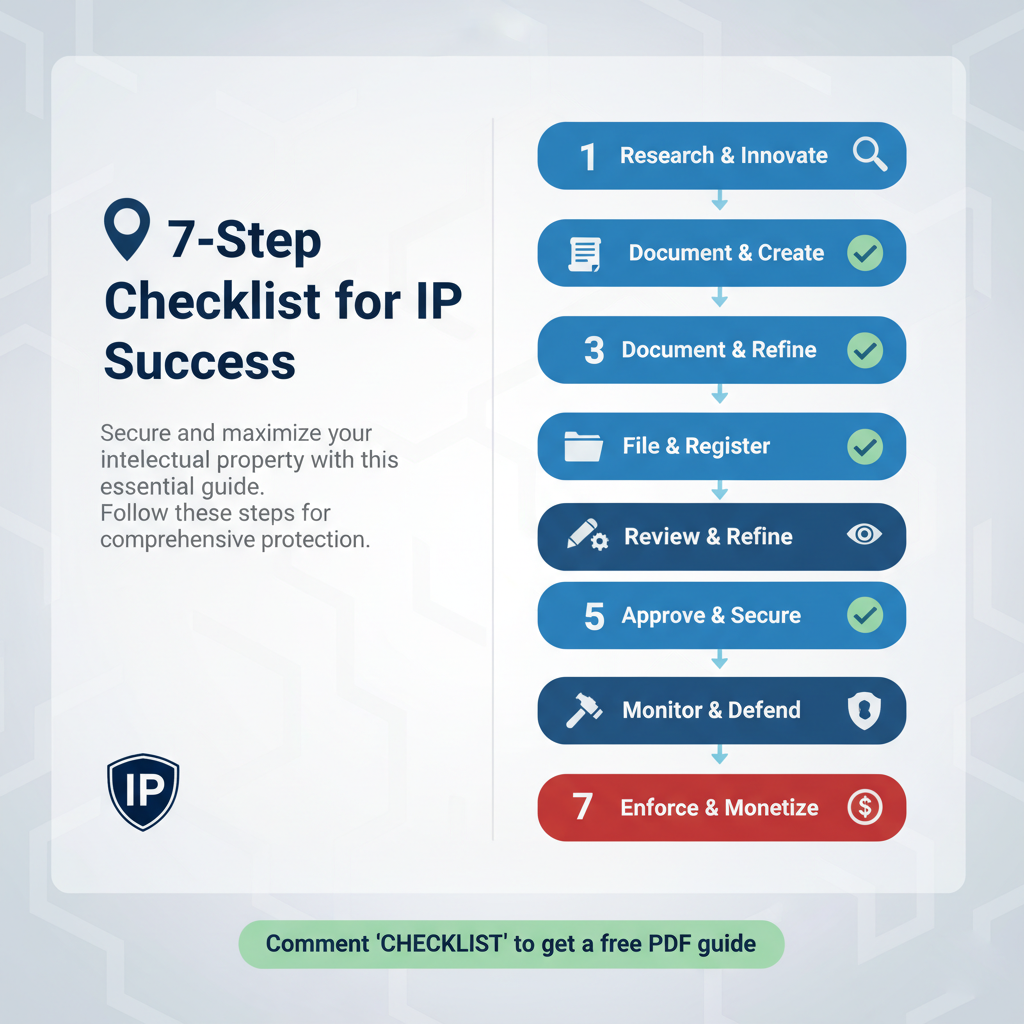
In this comprehensive guide, we’ll walk you through a 7-step checklist for IP success-a proven roadmap to protect your brand identity, secure your innovations, and maximize business growth.
What is Intellectual Property (IP)?
Intellectual Property (IP) refers to creations of the mind that have commercial value. IP rights give you exclusive ownership and prevent others from using your work without permission.
The four main types of IP include:
-
Trademarks – Protect brand names, logos, and slogans.
-
Patents – Protect inventions, processes, and unique products.
-
Copyrights – Protect creative works like music, writing, art, and software.
-
Trade Secrets – Protect confidential business information, like formulas or strategies.
Each type serves a unique purpose, but together they form the foundation of your business identity and market advantage.
Why Intellectual Property Matters for Business Growth
You may think IP is just for big corporations-but the truth is, IP protection benefits businesses of all sizes. According to research, companies with registered IP rights are valued significantly higher than those without.
Here’s why:
-
✅ Investor confidence – Investors prefer companies with strong IP portfolios.
-
✅ Customer trust – A protected brand is seen as reliable and professional.
-
✅ Revenue opportunities – You can license or sell your IP for extra income.
-
✅ Competitive advantage – IP gives you exclusivity in the market.
-
✅ Long-term security – Your business identity remains safe from copycats.
Without IP protection, your ideas are at risk of being copied, and you may lose both market share and credibility.
The 7-Step Checklist for IP Success
Now, let’s break down the exact steps you need to follow for smooth IP registration and enforcement.
1. Research
The first step is to make sure your idea, invention, or brand name is unique. Conduct a thorough IP search using online databases (like WIPO, USPTO, or national IP offices).
-
If you’re registering a trademark, check if a similar logo or brand already exists.
-
If you’re filing a patent, ensure your invention is new and not already published.
Skipping this step is one of the most common reasons applications get rejected.
2. Classify
Every IP must be filed under the correct category (class). For example:
-
Trademarks are divided into 45 classes (covering industries like food, clothing, tech, etc.).
-
Patents fall into technical classifications based on the field of invention.
Correct classification ensures your rights are enforceable in your specific industry.
3. File
Once you’ve done your research and classification, the next step is filing your application with the relevant IP authority.
-
Trademarks → File with the national or regional trademark office.
-
Patents → Submit to the patent office with detailed specifications.
-
Copyrights → Register with copyright authorities or agencies.
Pro Tip: Hire an IP attorney or consultant to avoid mistakes during filing.
4. Review
After filing, your application goes through a review process. Authorities will:
-
Check for conflicts with existing IP.
-
Ensure compliance with legal requirements.
-
Possibly raise objections that you need to address.
This stage requires patience and responsiveness.
5. Approve
Once the review process is successful, you’ll receive official approval. Congratulations-your Intellectual Property is now legally protected!
-
A trademark certificate gives you exclusive rights to your brand identity.
-
A patent grant gives you ownership of your invention.
-
A copyright registration confirms your authorship and creative ownership.
6. Monitor
Many businesses make the mistake of stopping at approval. But protecting IP doesn’t end there-you must monitor the market to ensure no one infringes on your rights.
-
Use IP watch services to track unauthorized use.
-
Monitor competitors, online marketplaces, and industry trends.
7. Enforce
If you discover infringement, you must enforce your IP rights. This can include:
-
Sending a cease-and-desist letter.
-
Filing a legal case for damages.
-
Seeking injunctions to stop unauthorized use.
Remember: An IP that isn’t enforced is as good as unprotected.
Common Mistakes in IP Registration
-
❌ Not doing proper research before filing
-
❌ Choosing the wrong class or category
-
❌ Submitting incomplete or incorrect applications
-
❌ Ignoring monitoring after approval
-
❌ Not renewing IP rights on time
Avoiding these mistakes can save you time, money, and legal stress.
How IP Adds Value to Your Business
Still wondering if IP is worth the effort? Here’s how it directly boosts your business:
-
Stronger branding – Customers identify with unique, protected brands.
-
Monetization opportunities – You can license your IP for royalties.
-
Funding & investment – A strong IP portfolio attracts venture capital.
-
Global expansion – Registered IP helps when entering international markets.
-
Exit strategy – A business with protected IP has a higher resale value.
Real-Life Examples of IP Success
-
Apple Inc. – Protects its logo, product designs, and patents aggressively.
-
Coca-Cola – Guarded its secret recipe (trade secret) for over 130 years.
-
Nike – Trademarked its iconic “swoosh” logo and “Just Do It” slogan worldwide.
Even small businesses benefit. A local clothing brand that trademarks its logo can stop copycats from diluting its identity.
Frequently Asked Questions (FAQs)
Q1. Do I need a lawyer to register IP?
Not always, but a lawyer increases your chances of approval and helps avoid mistakes.
Q2. How long does IP registration take?
-
Trademarks: 6–12 months
-
Patents: 2–5 years
-
Copyright: 1–6 months
Q3. Can I protect my IP internationally?
Yes, through systems like the Madrid Protocol (for trademarks) or PCT (Patent Cooperation Treaty) for patents.
Final Thoughts
Protecting your intellectual property is not just a legal formality-it’s an essential business strategy. With the right IP rights in place, you gain credibility, attract investors, and safeguard your long-term growth.
By following this 7-step checklist for IP success, you’ll be well on your way to securing your innovations, protecting your brand, and building a business that thrives in today’s competitive world.
Want to simplify the process?
Download our FREE IP Checklist PDF for a step-by-step guide with actionable tips.
