
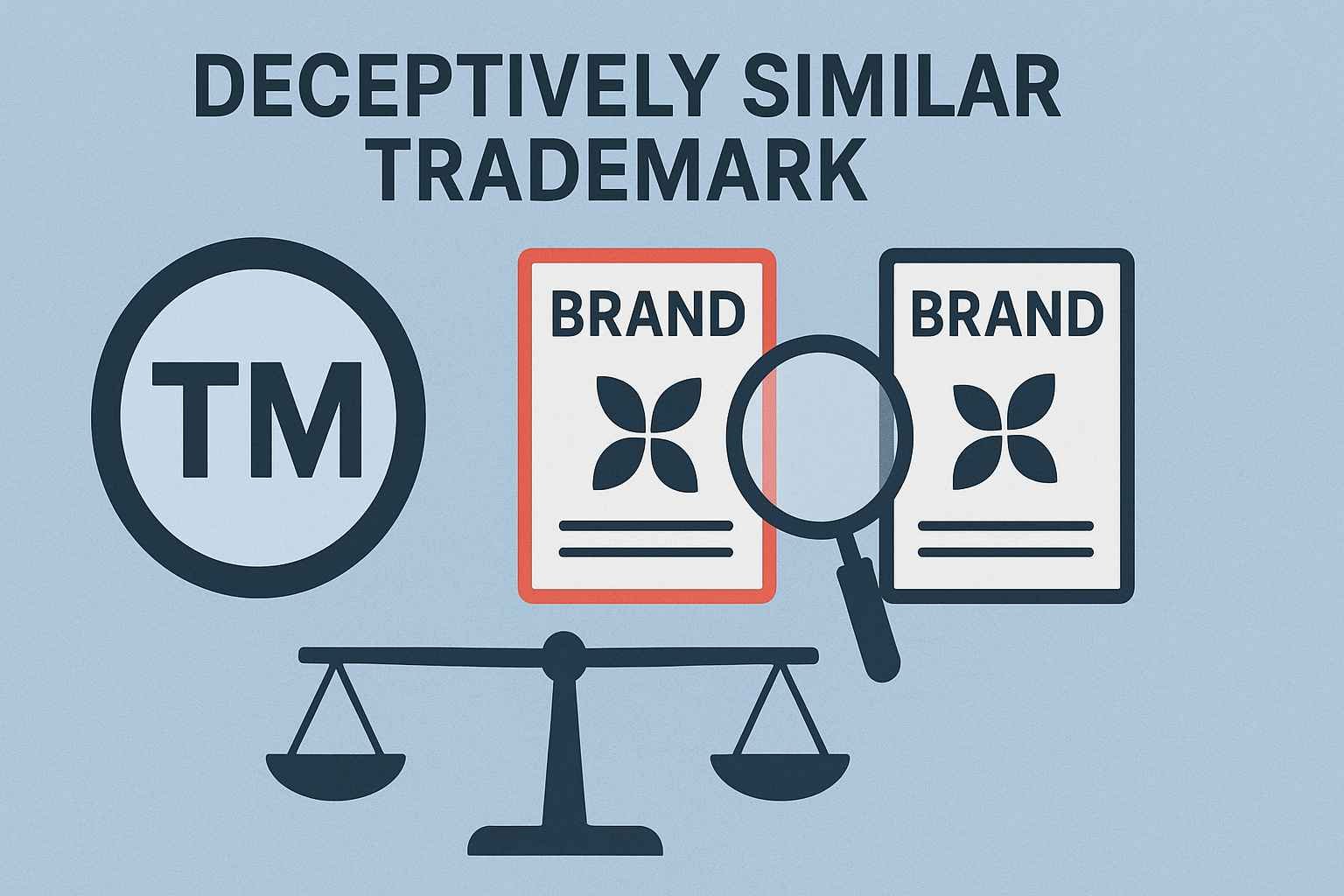
Regarding trademark law, few concepts are as crucial yet misunderstood as the deceptively similar trademark. Understanding what constitutes a deceptively identical trademark and how it impacts your rights is essential for businesses, brand owners, and entrepreneurs. At Prip LLC, we work with businesses daily to help them safeguard their intellectual property, enforce their rights, and avoid costly disputes.
This guide will explain everything you need to know about deceptively similar trademarks, legal remedies, enforcement mechanisms, pros and cons, and practical steps to protect your business.
What Is a Deceptively Similar Trademark?
A deceptively similar trademark closely resembles an existing registered trademark in a way that is likely to confuse or mislead consumers. This confusion may relate to:
- Origin of goods or services
- Quality of products
- Association with a particular brand
For example, suppose a company tries registering a logo or brand name that looks or sounds very similar to an established mark. In that case, consumers might assume a connection between the two businesses—even when none exists.
The test of deceptive similarity is not whether identical copies would confuse an ordinary consumer with imperfect recollection.
Legal Definition of Deceptively Similar Trademark
Deceptively similar marks are prohibited under most trademark laws worldwide, including the U.S. Trademark Act and international agreements like the Paris Convention.
The law states that a mark is deceptively similar if it so nearly resembles another mark as to be likely to deceive or cause confusion. Courts often examine:
- Visual similarity – fonts, colors, shapes, and design.
- Phonetic similarity – how the marks sound when spoken.
- Conceptual similarity – the underlying meaning or idea.
At Prip LLC, we emphasize to clients that even subtle similarities—such as a minor spelling difference—can create significant legal risk.
Examples of Deceptively Similar Trademark Cases
- Pepsi vs. Pepis – Courts found that “Pepis” was deceptively similar and likely to mislead consumers.
- Nike vs. Nikke – A small change in spelling was still considered deceptive similarity.
- Starbucks vs. Starbocks – Phonetic resemblance and visual similarity made it an infringement case.
These examples highlight how courts take deceptive similarity seriously to protect consumers and brand owners.
Why Deceptively Similar Trademarks Harm Businesses
- Consumer Confusion – Customers may purchase a product believing it comes from a reputable brand.
- Brand Dilution – Reputation and goodwill of the established brand are weakened.
- Revenue Loss – Customers diverted to deceptively similar products harm sales.
- Legal Costs – Businesses may spend heavily on litigation to enforce rights.
This is why we advise you to conduct a thorough trademark search before filing any new trademark application at Prip LLC.
Legal Remedies Against Deceptively Similar Trademark
When a deceptively similar trademark is identified, businesses have several remedies:
1. Opposition Proceedings
Businesses can file an opposition before the trademark registry if a deceptively similar trademark is applied for.
2. Cease-and-Desist Letters
A formal notice can be sent demanding that the infringer stop using the mark.
3. Civil Lawsuits
Businesses can file suits for injunctions, damages, and destruction of infringing goods.
4. Criminal Remedies
In some jurisdictions, using deceptively similar marks can attract criminal liability for counterfeiting.
5. Customs Protection
Trademark owners can request customs authorities to seize counterfeit or deceptively similar imports.
How to Avoid Deceptively Similar Trademark Issues
Businesses must adopt a proactive approach:
- Conduct Trademark Searches – Always check existing marks before filing.
- Hire Trademark Professionals – Firms like Prip LLC can evaluate risks.
- Use Distinctive Branding – Create unique names, logos, and slogans.
- Monitor Trademark Registries – Watch for new applications that may conflict with your brand.
- Enforce Rights Promptly – Delay can weaken your legal case.
Pros & Cons of Addressing Deceptively Similar Trademark
| Pros | Cons |
|---|---|
| Protects brand identity and goodwill | Legal proceedings may be costly |
| Prevents customer confusion | Opposition and lawsuits can be time-consuming |
| Ensures long-term exclusivity | Enforcement requires ongoing monitoring |
| Strengthens market position | small businesses may struggle with enforcement expenses |
The Role of Prip LLC in Protecting Your Trademark Rights
At Prip LLC, we assist clients with:
- Trademark searches to identify risks of deceptive similarity.
- Filing applications to ensure proper brand protection.
- Defending against infringement by filing opposition or court actions.
- Negotiating settlements to resolve disputes amicably.
Our expertise ensures that your brand remains protected, competitive, and free from the threat of deceptive similarity.
Global Perspective on Deceptively Similar Trademark
Trademark laws vary, but most jurisdictions—including the U.S., UK, EU, and India—recognize deceptively similar marks as a form of infringement. International treaties such as the TRIPS Agreement also harmonize protection standards.
This means businesses operating internationally must be vigilant. A mark acceptable in one country may still be challenged in another due to deceptive similarity.
Key Factors Courts Consider in Deceptively Similar Trademark Cases
- Nature of Goods/Services – Are they identical or related?
- Strength of the Original Mark – Famous marks enjoy broader protection.
- Consumer Awareness – The likelihood of confusion depends on consumer literacy and perception.
- Market Channels – Overlapping distribution increases risk.
- Actual Evidence of Confusion – Witness testimony and surveys can strengthen cases.
How Businesses Can Build Strong Trademark Protection
- Choose invented or coined words (e.g., Kodak, Xerox).
- Avoid descriptive or generic terms.
- Register trademarks in all relevant classes.
- Renew trademarks regularly.
- Use watch services to detect new filings.
Digital Era Challenges with Deceptively Similar Trademarks
The rise of online marketplaces and domain names has increased risks:
- Cybersquatting – Registering domains deceptively similar to famous marks.
- E-commerce Infringement – Sellers using deceptively similar marks to trick buyers.
- Social Media Issues – Fake accounts imitating brand trademarks.
At Prip LLC, we help businesses enforce rights in the digital landscape by taking down infringing domains, social media accounts, and listings.
Enforcement Strategies for Businesses
- Trademark Watch Services – Monitor new filings worldwide.
- Digital Monitoring Tools – Detect online counterfeits.
- Partnership with Enforcement Agencies – Customs and police support.
- Alternative Dispute Resolution (ADR) – Arbitration or mediation for quicker results.
Frequently Asked Questions (FAQ) on Deceptively Similar Trademarks
1. What does a deceptively similar trademark mean?
A deceptively similar trademark is a mark that looks, sounds, or conveys an impression similar enough to an existing registered trademark that it may confuse or mislead consumers about the source of goods or services.
2. How do I know if my trademark is deceptively similar?
The best way is to conduct a comprehensive trademark search. Courts and registries examine visual, phonetic, and conceptual similarities. At Prip LLC, we provide detailed trademark clearance searches to help businesses avoid conflicts.
3. Can two companies use the same or similar trademarks?
Yes, but only if the trademarks are used in completely different industries or classes of goods/services, where consumer confusion is unlikely. However, for famous trademarks, even unrelated industries may face restrictions.
4. What should I do if someone copies my brand with a deceptively similar trademark?
You can send a cease-and-desist notice, file an opposition against their trademark application, or take legal action. Prip LLC helps businesses with both preventive and enforcement strategies.
5. What are the penalties for using a deceptively similar trademark?
Penalties vary by jurisdiction but can include:
- Injunctions stopping the use of the infringing mark.
- Damages or account of profits awarded to the original brand owner.
- Destruction of infringing goods.
- In some cases, criminal liability for counterfeiting.
6. Is a small spelling change enough to avoid deceptive similarity?
No. Courts have consistently held that minor spelling changes or alterations in font/design do not eliminate confusion if the overall impression remains similar.
7. How long does resolving a deceptively similar trademark dispute take?
Timelines vary. Opposition proceedings may take 1–2 years, while full litigation can extend longer. Alternative dispute resolution (ADR) methods like mediation may provide quicker solutions.
8. Do I need a lawyer to handle deceptively similar trademark issues?
While you can file some actions independently, trademark disputes are complex. Professional guidance from firms like Prip LLC is strongly recommended to protect your brand effectively.
9. Can deceptively similar trademarks exist in different countries?
Yes, since trademark laws are territorial. However, with globalization and treaties like TRIPS, businesses are expected to avoid deceptively similar marks internationally.
10. How can Prip LLC help me with deceptively similar trademark issues?
We provide:
- Trademark search and clearance before application.
- Filing and opposition services to block conflicting marks.
- Litigation support for enforcement.
- Digital monitoring for online trademark protection.
Final Thoughts
A deceptively similar trademark can erode brand value, confuse customers, and invite legal battles. Businesses must be proactive in creating distinctive branding, monitoring potential threats, and aggressively enforcing their rights.
At Prip LLC, we ensure your brand is legally protected and commercially strong against deceptive similarities in today’s competitive market.
