
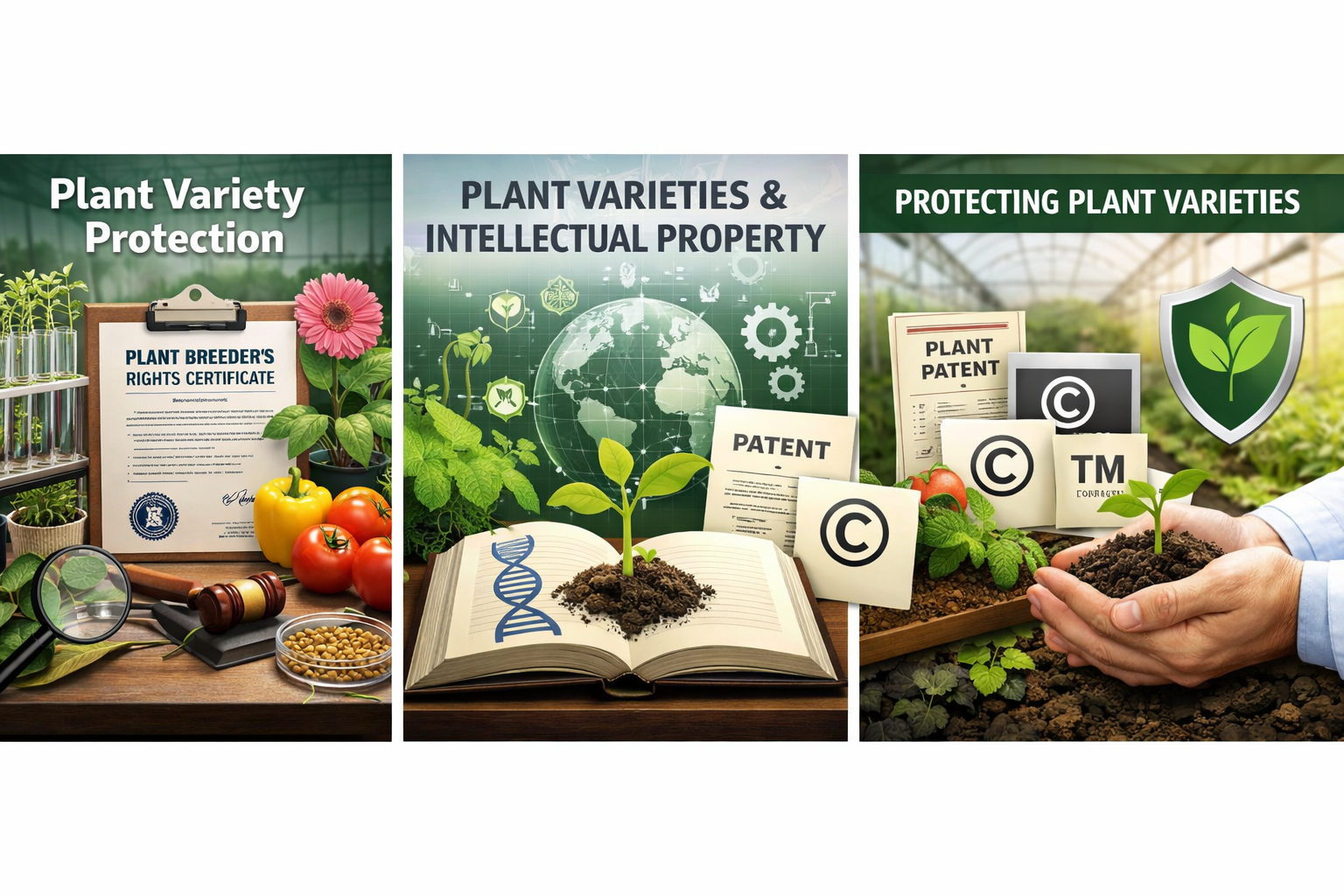
The topic plant varieties in intellectual property sits at the intersection of agriculture, innovation, science, and law. It addresses a fundamental question: how can new plant varieties developed through years of research, breeding, and investment be legally protected while still supporting food security, biodiversity, and farmer interests?
This page is written as in-depth page content with a blog-style flow. It reflects real legal, regulatory, and commercial realities rather than abstract theory. The perspective throughout aligns with how Prip LLC approaches plant variety protection as a strategic intellectual property asset, especially for breeders, agricultural companies, research institutions, and agri-biotech innovators.
Understanding Plant Varieties in Intellectual Property
When we talk about plant varieties in intellectual property, we are referring to legal systems that protect new, distinct, uniform, and stable plant varieties developed through breeding or biotechnology. These systems recognize that plant breeding requires significant time, expertise, and financial investment.
Intellectual property protection for plant varieties exists to:
-
Encourage innovation in agriculture
-
Reward plant breeders
-
Enable commercialization of new varieties
-
Support technological advancement in food systems
Without protection, breeders would have little incentive to invest in long-term research.
Why Plant Varieties Need Intellectual Property Protection
Developing a new plant variety can take:
-
8–15 years of research
-
Multiple breeding cycles
-
Extensive field trials
-
Regulatory testing
Once released, a plant variety can be easily reproduced. Without legal protection, competitors could copy and commercialize it without compensating the breeder.
This is the core reason plant varieties in intellectual property law exist.
Historical Evolution of Plant Variety Protection
Plant variety protection emerged as agriculture became more scientific and commercialized.
Key developments include:
-
Early seed laws focused on quality control
-
Recognition of breeders’ rights in the 20th century
-
International harmonization through treaties
Today, plant varieties in intellectual property are recognized globally, though systems vary by country.
Plant Breeders’ Rights (PBR) / Plant Variety Protection (PVP)
The most common framework for protecting plant varieties is Plant Breeders’ Rights, also known as Plant Variety Protection.
What PBR Protects
-
New plant varieties
-
Distinct, uniform, and stable traits
-
Commercial propagation rights
This system gives breeders exclusive control over production, sale, and distribution of propagating material.
Criteria for Protecting Plant Varieties
To qualify for protection, plant varieties must meet specific criteria:
- Novelty
The variety must not have been commercially exploited before a defined period.
- Distinctness
It must be clearly distinguishable from existing varieties.
- Uniformity
Plants of the variety must be sufficiently uniform in relevant characteristics.
- Stability
The defining traits must remain consistent across generations.
These criteria are central to plant varieties in intellectual property systems worldwide.
International Framework: UPOV Convention
The UPOV Convention (International Union for the Protection of New Varieties of Plants) is the backbone of global plant variety protection.
UPOV:
-
Sets minimum standards
-
Harmonizes protection across countries
-
Supports breeder rights
Many national plant variety laws are based on UPOV principles.
National Laws Governing Plant Varieties
Countries implement plant variety protection differently:
-
Some follow UPOV strictly
-
Others adapt it to local agricultural needs
This variation makes strategic planning essential for breeders operating internationally.
Prip LLC frequently advises on jurisdiction-specific strategies for plant varieties in intellectual property.
Patents and Plant Varieties
In some jurisdictions, plant-related inventions may also be protected by patents.
Patent Protection May Cover
-
Genetic modifications
-
Biotechnological processes
-
Microorganisms
-
Specific plant traits
However, patents and plant variety rights serve different purposes and often coexist.
Difference Between PBR and Patents
| Plant Breeders’ Rights | Patents |
|---|---|
| Protect plant varieties | Protect inventions |
| Based on NDUS criteria | Based on novelty and inventiveness |
| Allow breeder’s exemption | Often no research exemption |
| Limited scope | Broader monopoly |
Understanding this distinction is critical in plant varieties in intellectual property planning.
Farmers’ Rights and Plant Variety Protection
A major policy issue in plant varieties in intellectual property is balancing breeder rights with farmer rights.
Many systems recognize:
-
Farmers’ privilege to save seed
-
Traditional knowledge protection
-
Benefit-sharing mechanisms
These considerations are especially important in developing economies.
Plant Varieties and Biodiversity
Critics argue that strong IP protection may reduce biodiversity. Supporters argue it:
-
Encourages development of resilient crops
-
Supports climate adaptation
-
Improves yield and disease resistance
Modern plant varieties in intellectual property frameworks increasingly address sustainability.
Commercialization of Protected Plant Varieties
Protected plant varieties can be:
-
Licensed to seed companies
-
Sold in exclusive markets
-
Used in joint ventures
Intellectual property transforms plant varieties into commercial assets.
Licensing Strategies for Plant Varieties
Licensing allows breeders to:
-
Expand market reach
-
Generate recurring income
-
Control quality and distribution
Effective licensing is a core service area at Prip LLC.
Enforcement of Plant Variety Rights
Rights must be enforced to be meaningful.
Enforcement actions may include:
-
Monitoring seed markets
-
Addressing unauthorized propagation
-
Legal proceedings when necessary
Practical enforcement strategies are essential in plant varieties in intellectual property.
Challenges in Enforcing Plant Variety Rights
Enforcement is complex due to:
-
Informal seed systems
-
Cross-border trade
-
Difficulty proving infringement
Strategic documentation and testing help address these challenges.
Plant Varieties in Intellectual Property and Biotechnology
Biotechnology has expanded the scope of plant protection.
Innovations include:
-
Gene editing
-
Marker-assisted breeding
-
Hybrid development
IP frameworks continue to evolve alongside these technologies.
Traditional Knowledge and Plant Varieties
Indigenous and local communities contribute significantly to plant diversity.
Modern IP systems increasingly recognize:
-
Access and benefit-sharing
-
Prior informed consent
-
Protection of traditional varieties
This area remains legally and ethically complex.
Economic Impact of Plant Variety Protection
Strong plant variety protection:
-
Attracts investment
-
Supports agricultural R&D
-
Enhances food security
Countries with effective systems often see higher innovation rates.
Plant Varieties in Intellectual Property for Startups
Agri-startups benefit from:
-
Clear IP ownership
-
Investor confidence
-
Market exclusivity
Early IP planning is crucial.
Public Research Institutions and Plant IP
Universities and public labs often:
-
Develop new varieties
-
License them to industry
-
Balance public interest with commercialization
Clear IP policies are essential.
Global Trade and Protected Plant Varieties
Protected varieties influence:
-
Seed exports
-
Trade agreements
-
Market access
IP compliance is increasingly tied to international trade.
Regulatory Approval vs IP Protection
IP protection does not replace:
-
Biosafety approval
-
Variety registration
-
Seed certification
These systems operate alongside plant varieties in intellectual property law.
Duration of Protection
Plant variety protection typically lasts:
-
20–25 years
-
Longer for trees and vines
After expiry, varieties enter the public domain.
Strategic Importance of IP Mapping
Breeders should map:
-
Markets
-
Crop types
-
Protection mechanisms
This ensures efficient resource use.
Common Misconceptions About Plant Variety IP
-
“Plants cannot be protected”
-
“Farmers lose all rights”
-
“Patents are the only option”
Understanding the system prevents costly mistakes.
Pros & Cons of Protecting Plant Varieties in Intellectual Property
| Pros | Cons |
|---|---|
| Encourages innovation | Registration costs |
| Protects breeder investment | Enforcement challenges |
| Supports commercialization | Regulatory complexity |
| Attracts funding | Public policy debates |
| Enables licensing revenue | Jurisdictional variation |
Why Strategic Guidance Matters
Plant variety protection is not automatic. It requires:
-
Legal analysis
-
Market understanding
-
Long-term planning
This is why clients work with Prip LLC to structure effective plant IP strategies.
Plant Varieties as Long-Term Intellectual Property Assets
Properly protected plant varieties:
-
Increase company valuation
-
Support mergers and acquisitions
-
Enable global expansion
They are not just legal rights—they are business assets.
Using Intellectual Property to Support Sustainable Agriculture
Modern plant varieties in intellectual property frameworks increasingly:
-
Promote climate resilience
-
Support resource efficiency
-
Encourage responsible breeding
IP and sustainability are no longer opposites.
Navigating Multi-Country Protection
Breeders operating internationally must:
-
File in multiple jurisdictions
-
Align with local laws
-
Manage costs strategically
Global coordination is essential.
Role of Advisors in Plant Variety Protection
Professional advisors help:
-
Choose the right protection route
-
Draft licenses
-
Enforce rights
-
Avoid regulatory pitfalls
Prip LLC provides integrated support across these areas.
Frequently Asked Questions (FAQ)
-
What are plant varieties in intellectual property?
They are plant types protected by legal systems that recognize breeders’ rights over new varieties. -
How are plant varieties protected?
Primarily through Plant Breeders’ Rights or Plant Variety Protection laws. -
Can plants be patented?
In some jurisdictions, certain plant-related inventions can be patented. -
What is the UPOV Convention?
An international treaty setting standards for plant variety protection. -
Do farmers lose rights under plant variety protection?
Most systems preserve limited farmers’ rights, such as seed saving. -
How long does protection last?
Typically 20–25 years, depending on crop type. -
Is registration required?
Yes, plant variety protection usually requires formal registration. -
Can traditional varieties be protected?
They may be protected through alternative frameworks, including traditional knowledge systems. -
Why is IP important for plant breeders?
It enables commercialization, investment recovery, and innovation. -
Why work with Prip LLC on plant variety protection?
Because Prip LLC provides strategic, jurisdiction-aware guidance tailored to agricultural and biotech innovation.
