
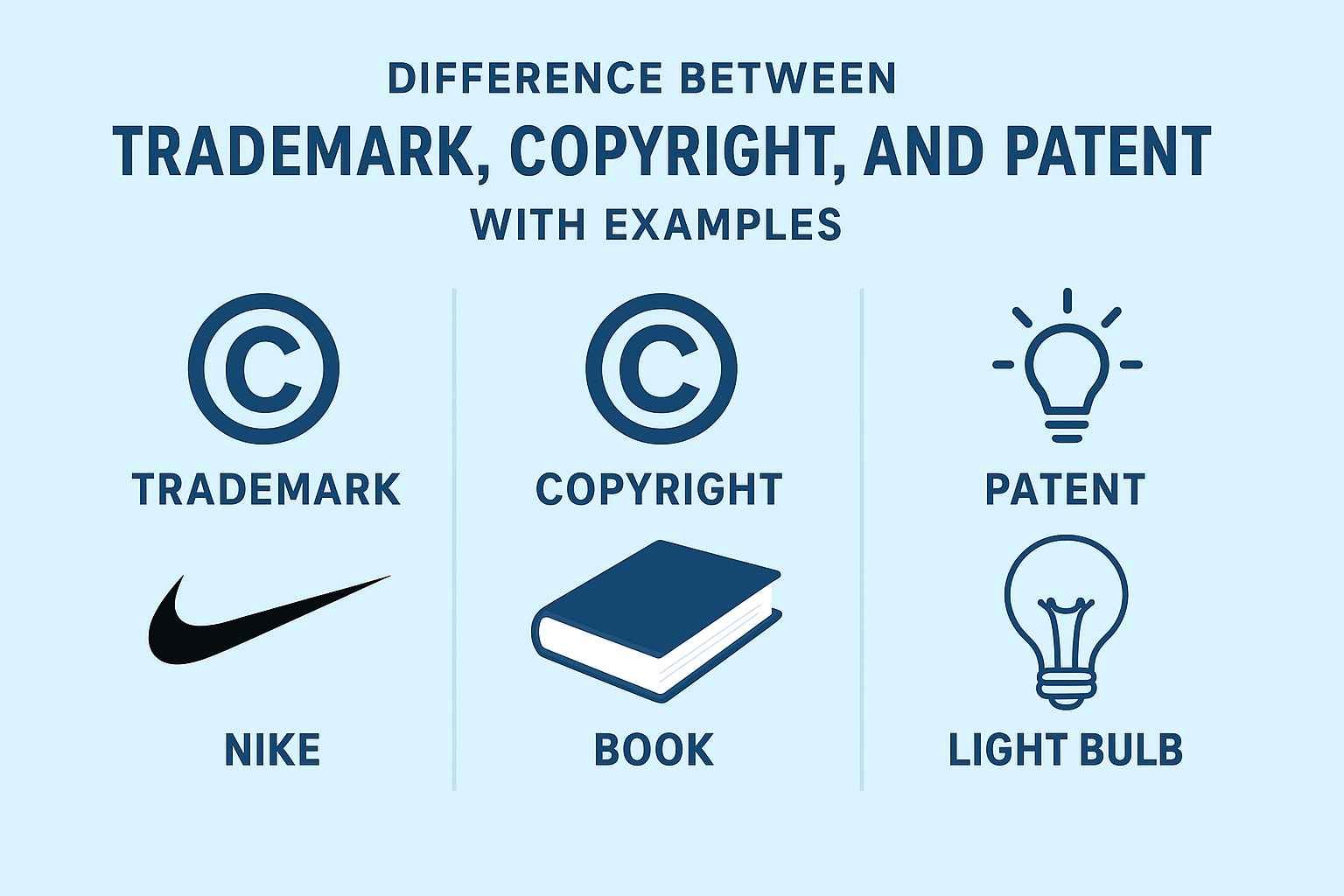
In the modern business and creative landscape, understanding the difference between trademark, copyright, and patent with examples is essential for protecting intellectual property, building strong brands, and fostering innovation. At Prip LLC, we provide businesses, creators, and innovators with comprehensive guidance to navigate these legal protections effectively. This article will explore the nuances of trademarks, copyrights, and patents, provide detailed examples, and explain their real-world applications.
What is a Trademark? Definition, Examples, and Scope
A trademark is a type of intellectual property that protects brand identity. It includes logos, names, slogans, designs, and other symbols that distinguish a company’s goods or services from those of competitors. Trademarks are critical for maintaining brand recognition, preventing consumer confusion, and enforcing market authority.
Examples of Trademarks:
- Apple Inc. – The Apple logo is a globally recognized trademark.
- Nike – The “Swoosh” symbol and “Just Do It” slogan.
- Coca-Cola – The distinctive script logo.
Trademarks do not protect the product itself; they protect the brand’s identity and consumer association. At Prip LLC, we emphasize registering trademarks early to prevent disputes and strengthen market positioning.
Understanding Copyright: Protecting Creative Works
Copyright is a form of intellectual property that protects original works of authorship, such as literary, artistic, musical, and digital content. Copyright safeguards the expression of ideas, not the ideas themselves. It ensures that creators retain control over how their work is used, reproduced, or distributed.
Examples of Copyright:
- Books and novels – J.K. Rowling’s Harry Potter series.
- Music – Songs by Beyoncé or The Beatles.
- Movies and TV shows – Disney films and Netflix series.
- Software code – Microsoft Windows and proprietary software programs.
Copyright protection is automatic upon creation, but registration enhances enforceability in legal disputes. Prip LLC advises businesses to document and register all creative content, ensuring strong legal Protection against infringement.
What is a Patent? Definition, Examples, and Importance
A patent is a legal protection granted for inventions or technological innovations. It provides the inventor exclusive rights to manufacture, sell, or license their invention for a specific period, typically 20 years. Patents encourage innovation by offering inventors temporary monopoly rights while eventually contributing to public knowledge.
Examples of Patents:
- Smartphone technology – Apple’s design and utility patents on the iPhone.
- Pharmaceuticals – Pfizer’s patents for COVID-19 vaccines.
- Mechanical inventions – Tesla’s electric vehicle battery technology.
Patents require rigorous documentation, including detailed technical specifications. At Prip LLC, we guide clients through patent filing, ensuring inventions are protected against infringement and fostering long-term business growth.
Key Difference between trademark copyright and patent with example
| Feature | Trademark | Copyright | Patent |
|---|---|---|---|
| Protects | Brand identity (logos, slogans, designs) | Original works of authorship | Inventions, technological processes |
| Duration | Renewable indefinitely | Lifetime of creator + 70 years (varies) | Usually 20 years from filing date |
| Automatic Protection | No, must register in most countries | Yes, automatic upon creation | No, must apply and meet patent criteria |
| Examples | Nike Swoosh, Apple Logo | J.K. Rowling books, Beyoncé music | iPhone design, Tesla battery technology |
| Focus | Market distinction and brand recognition | Creative expression and reproduction rights | Technological innovation and utility |
This table highlights the core differences in protection, scope, and application. At Prip LLC, we help businesses understand these distinctions to prevent legal disputes and safeguard intellectual property assets effectively.
Practical Examples of Trademark, Copyright, and Patent in Business
Trademark Example
A startup launches a new beverage brand with a unique logo and slogan. By registering a trademark, the brand ensures no other company can use similar branding, protecting its market presence.
Copyright Example
A software company develops an educational app with original graphics and code. Copyright automatically protects the app’s visual design, code, and content, allowing the company to pursue legal action if others replicate it without permission.
Patent Example
An engineering firm invents a renewable energy device. Filing a patent grants exclusive rights, preventing competitors from manufacturing or selling the invention for 20 years. The inventor can license the technology to other companies for profit.
Benefits of Understanding the Difference Between Trademark, Copyright, and Patent
- Enhanced Legal Protection – Clear knowledge ensures businesses protect the right intellectual property.
- Minimized Risk – Avoids costly lawsuits and infringement disputes.
- Brand Strengthening – Trademarks secure brand identity, copyrights protect content, and patents safeguard innovation.
- Market Advantage – Companies with strong IP protection attract investors and maintain a competitive edge.
- Innovation Encouragement – Patents incentivize research and development while preserving investment.
At Prip LLC, we emphasize a strategic IP approach, combining all three protections where applicable for maximum business security.
Pros & Cons Table: Trademark, Copyright, and Patent
| Type | Pros | Cons |
|---|---|---|
| Trademark | Protects brand identity, prevents confusion, strengthens credibility | Requires registration, enforcement can be costly |
| Copyright | Automatic protection, covers creative works, enforceable legally | Limited duration, does not protect ideas, disputes can be complex |
| Patent | Protects inventions, encourages innovation, provides exclusive rights | Expensive application process, limited duration, requires disclosure |
Common Mistakes Businesses Make in Intellectual Property Protection
- Failing to Register – Many startups neglect to register trademarks or patents early, risking infringement.
- Confusing IP Types – Companies often misclassify copyright, patent, or trademark protection.
- Ignoring Global Protection – Not securing IP in international markets can allow competitors to exploit ideas abroad.
- Poor Documentation – Without detailed records, enforcing rights becomes difficult.
- Neglecting Employee Training – Employees unaware of confidentiality may leak trade secrets or creative content.
Prip LLC works with businesses to avoid these pitfalls and ensures intellectual property strategies are effective and enforceable worldwide.
Legal Implications and Case Studies
1. Apple vs. Samsung
A patent dispute over smartphone designs resulted in multi-billion-dollar awards. This case emphasizes the value of patents in protecting technological innovation and market share.
2. Disney vs. Redbox
A copyright lawsuit concerning movie code resale highlights the importance of safeguarding creative works and digital content distribution.
3. Nike vs. Adidas
Trademark disputes between major sports brands demonstrate how protecting logos and slogans maintains market credibility and prevents consumer confusion.
These cases serve as educational examples for businesses on the necessity of strategic IP protection, which Prip LLC consistently advises clients to follow.
How Businesses Can Leverage Intellectual Property for Growth
- Early Registration – Secure patents, trademarks, and copyrights at inception.
- Monitoring Competitors – Detect potential infringements proactively.
- Strategic Licensing – Monetize IP through licenses and partnerships.
- Educating Teams – Ensure staff understand the importance of IP and confidentiality.
- Legal Guidance – Partner with IP specialists to navigate complex disputes.
With guidance from Prip LLC, businesses can turn intellectual property into long-term strategic assets rather than mere legal obligations.
Future Trends in Intellectual Property
- Artificial Intelligence and IP – AI-generated works are creating new challenges in copyright law.
- Blockchain for Patents – Secure, immutable IP records can transform patent management.
- Global Harmonization – Efforts to standardize IP laws internationally are increasing.
- Digital Media Proliferation – Online content distribution requires stronger copyright enforcement strategies.
Staying informed on these trends is essential for businesses that want to protect innovation and maintain market leadership.
Frequently Asked Questions (FAQs)
Q1: What is the difference between a trademark, a copyright, and a patent?
A: Trademarks protect brand identity (like logos and brand names), copyrights protect creative works (like books, music, and software), and patents protect inventions and technological innovations.
Q2: Can one product have multiple types of IP protection?
A: Yes. A single product can have a patented invention, copyrighted software, and a trademarked logo, with each type serving a different purpose.
Q3: How long do trademarks, copyrights, and patents last?
A: Trademarks can be renewed indefinitely, copyrights typically last for the creator’s lifetime plus 70 years, and patents usually last 20 years from the filing date.
Q4: Is registration mandatory for IP protection?
A: Patents and trademarks generally require registration, while copyright protection is automatic upon creation.
Q5: Can small businesses afford IP protection?
A: While costs are involved, strategic planning and professional guidance—such as the services offered by Prip LLC—make IP protection manageable and highly beneficial.
Q6: What happens if someone infringes on my intellectual property?
A: Legal action can be taken, including injunctions, monetary damages, and licensing negotiations. Early registration of IP improves enforceability.
Q7: How does Prip LLC assist with intellectual property?
A: Prip LLC provides guidance on IP registration, monitoring, legal defense, licensing strategies, and comprehensive education for businesses and creators.
