
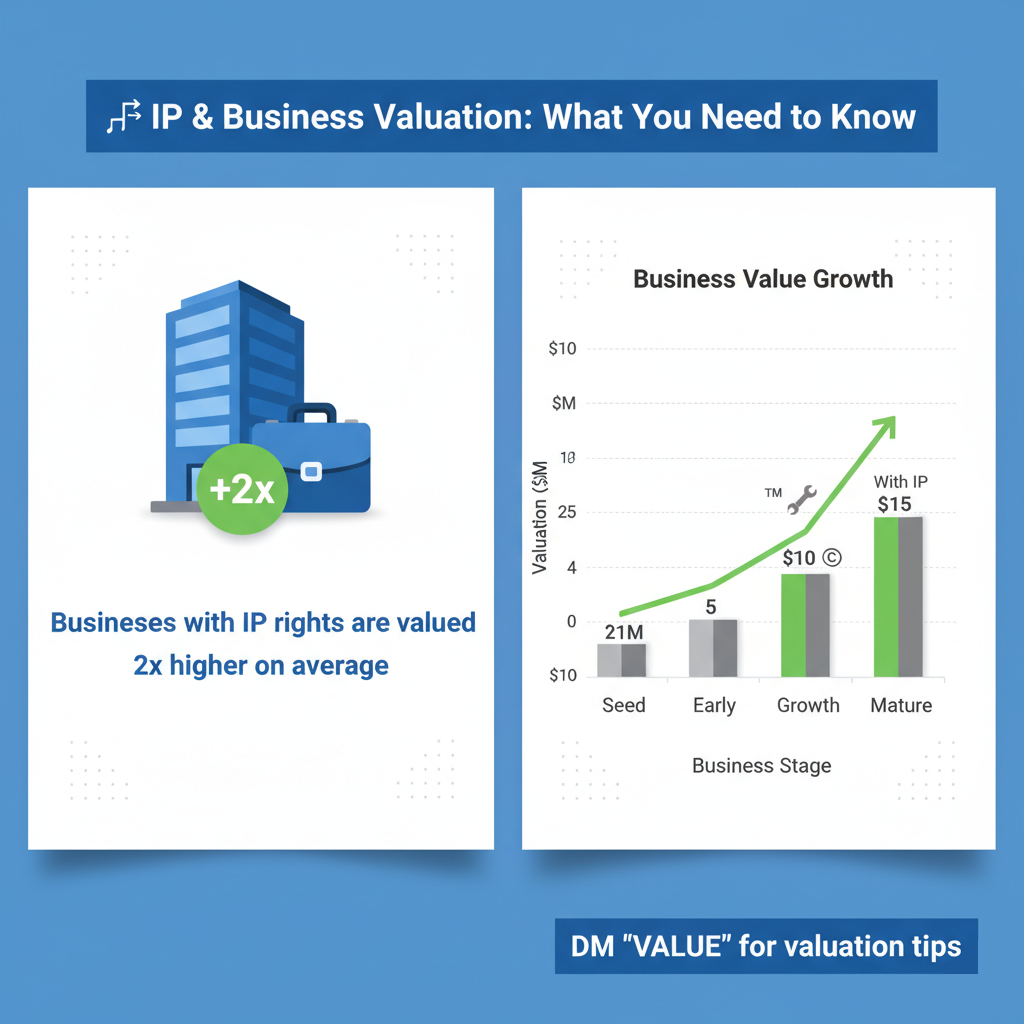
In today’s hyper-competitive business world, valuation is more than just numbers on a balance sheet. It reflects how the market perceives your company’s future potential, stability, and credibility. While financial performance plays a big role, there’s another factor that investors, buyers, and stakeholders take very seriously-Intellectual Property (IP).
Businesses that actively protect and leverage their IP are consistently valued higher than those that don’t. In fact, research shows that companies with IP rights are, on average, valued 2x higher than businesses without any formal protection.
But why does IP matter so much in valuation? And how can you use it to strengthen your market position? Let’s break it down.
What is Intellectual Property (IP)?
Intellectual Property refers to intangible assets created by your business—things you can’t physically touch but that carry enormous value. These include:
-
Trademarks → Protect brand names, logos, taglines, and product identities.
-
Patents → Protect inventions, unique processes, and product innovations.
-
Copyrights → Protect creative works like content, software, designs, and media.
-
Trade Secrets → Protect confidential business information, formulas, or strategies.
When these assets are protected under IP law, they become exclusive rights that only your company can legally use, license, or sell.
Why IP Directly Impacts Business Valuation
-
Brand Strength & Recognition
A trademarked brand instantly carries more authority and consumer trust. A recognizable brand increases market share and creates customer loyalty. -
Defensibility Against Competitors
Patents and copyrights create strong legal barriers. Competitors can’t easily copy your innovations or creative assets, giving you a sustainable edge. -
Revenue Opportunities
IP assets can be licensed, franchised, or even sold, creating multiple revenue streams beyond your core business. -
Investor Confidence
Venture capitalists, private equity firms, and buyers look for companies with defensible business models. Strong IP demonstrates that your company is not only innovative but also well-protected. -
Exit Strategy & M&A
When selling or merging your business, IP plays a crucial role in negotiations. Companies with strong IP portfolios command higher valuations and attract more buyers.
Real-World Examples of IP Driving Valuation
-
Apple → Over 70% of Apple’s valuation is tied to intangible assets like brand equity, trademarks, and patents.
-
Coca-Cola → Its trademarked brand name and secret formula contribute massively to its multi-billion-dollar valuation.
-
Pharmaceutical Startups → Many are valued primarily on the strength of their patents-even before generating significant revenue.
Common Mistakes Businesses Make About IP
-
Thinking IP is only for big corporations
-
Delaying registration until it’s too late
-
Assuming trademarks or patents in one country cover global protection
-
Overlooking copyrights for content, software, or designs
These mistakes can cost millions in lost opportunities, legal disputes, or undervaluation during fundraising.
Steps to Use IP to Boost Your Valuation
-
Audit Your IP Portfolio
List all trademarks, patents, copyrights, and trade secrets your company owns (or should own). -
Register & Protect
Secure trademarks for your brand and products, file patents for innovations, and register copyrights for content. -
Leverage Licensing
Explore opportunities to license your IP to partners, generating additional revenue. -
Communicate IP Value to Investors
Highlight your IP assets in your pitch deck, financial reports, and investor meetings. -
Build Long-Term IP Strategy
Treat IP like a growth engine-not just a legal checkbox.
The Future of IP & Valuation
In the digital economy, intangible assets often outweigh physical assets in value. Businesses that own and protect their ideas, brands, and innovations will consistently rank higher in valuation metrics.
Investors know this. That’s why startups and SMEs with registered IP are not only more likely to receive funding but also more likely to expand globally and withstand market challenges.
Final Thoughts
Your IP is more than just protection-it’s market power. Whether you’re preparing for funding, planning an exit, or simply building long-term business credibility, an IP strategy is essential to maximizing your valuation.
Want to know how to protect your IP and position your business for a higher valuation? DM me the word VALUE and I’ll share practical steps tailored to your industry.
