
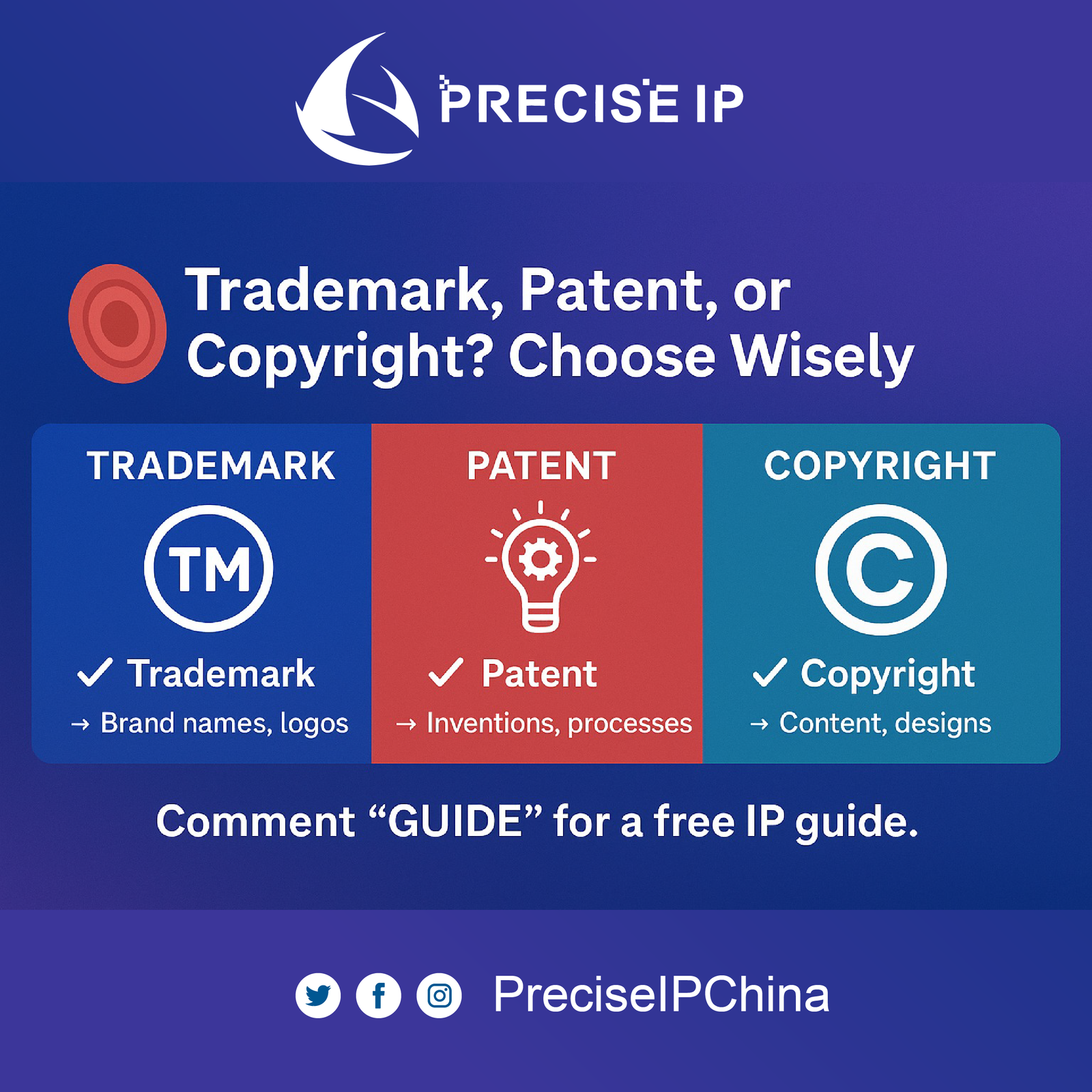
In today’s competitive business world, ideas are currency. Whether you’re launching a startup, building a global brand, or creating unique content, your intellectual property (IP) is one of your most valuable assets. But here’s the challenge—not every idea needs the same kind of protection.
This is where many entrepreneurs and creators get confused:
Do I need a trademark?
Is a patent necessary?
Should I rely on copyright?
The truth is: each type of IP protection serves a different purpose. Choosing the right one can safeguard your innovation, strengthen your market position, and even attract investors.
In this article, we’ll break down:
-
What trademarks, patents, and copyrights really mean
-
The differences between them
-
When to use which protection
-
Real-world examples of successful IP strategies
-
Mistakes to avoid
-
How to build a winning IP strategy for your business
Let’s dive in.
What is a Trademark?
A trademark is a symbol, word, phrase, or design that identifies and distinguishes your brand from others. It protects your brand identity in the marketplace.
Examples of trademarks:
-
Nike’s ✔ swoosh logo
-
McDonald’s golden arches
-
The word “Google”
What trademarks cover:
-
Business names
-
Product names
-
Logos and symbols
-
Taglines and slogans
Why trademarks matter:
-
Prevents competitors from using your brand identity
-
Builds consumer trust and recognition
-
Increases brand value (some trademarks are worth billions!)
Case Study:
Apple’s bitten apple logo is one of the most recognized trademarks worldwide. It’s not just a logo; it’s a brand promise of innovation and quality.
What is a Patent?
A patent protects inventions and innovations. It gives you exclusive rights to make, use, or sell your invention for a certain period of time (usually 20 years).
Examples of patents:
-
The first telephone by Alexander Graham Bell
-
The iPhone’s touchscreen technology
-
A new pharmaceutical drug formula
What patents cover:
-
New machines, tools, and devices
-
Processes and methods
-
Software algorithms
-
Chemical compositions
Why patents matter:
-
Prevents others from copying or selling your invention
-
Gives your startup competitive advantage
-
Attracts investors by proving innovation credibility
Case Study:
Dyson revolutionized vacuum cleaners with patented cyclone technology. By protecting it with patents, Dyson prevented competitors from copying and became a market leader.
What is Copyright?
Copyright protects original creative works—whether written, visual, musical, or digital. Unlike trademarks and patents, copyright exists automatically once the work is created.
Examples of copyright:
-
Books, poems, and blog posts
-
Music and films
-
Artwork and photography
-
Software code
-
Marketing content and designs
Why copyright matters:
-
Ensures creators are recognized and rewarded
-
Prevents unauthorized copying and distribution
-
Protects your content in the digital age
Case Study:
J.K. Rowling’s Harry Potter series is copyrighted worldwide. This ensures publishers, filmmakers, and merchandise producers cannot use the material without proper licensing.
Key Differences Between Trademark, Patent, and Copyright
| Feature | Trademark | Patent | Copyright |
|---|---|---|---|
| Protects | Brand names, logos, slogans | Inventions, processes, products | Creative works, designs, content |
| Duration | Renewable indefinitely | 20 years (usually) | Life of author + 50–70 years |
| Cost | Moderate | High (requires legal/technical work) | Low to moderate |
| Examples | Coca-Cola logo | Tesla battery technology | Movies, books, music |
Common Mistakes to Avoid
-
Assuming one protection covers everything
Many startups think registering a trademark is enough-but if you have an invention, you also need a patent. -
Delaying protection
Waiting too long leaves room for competitors to copy your idea. -
Not considering international markets
If you plan to expand globally, register IP in multiple countries. -
Ignoring digital content
In the online era, your blogs, videos, and designs need copyright protection.
Why the Right IP Strategy Matters
A strong IP portfolio is more than just protection-it’s a business growth engine.
-
For startups → Increases investor confidence
-
For businesses → Strengthens competitive advantage
-
For creators → Ensures recognition and monetization
-
For global expansion → Simplifies entering new markets
According to studies, startups with registered IP are 3x more likely to attract serious investors. Why? Because investors see IP as proof that the business is defensible and future-proof.
How to Choose the Right Protection
Ask yourself these questions:
-
Is my idea a brand? → Go for Trademark
-
Is my idea an invention or process? → Go for Patent
-
Is my idea a creative work? → Go for Copyright
Often, businesses need a combination of all three.
Example: A software company may trademark its brand name, patent its unique algorithm, and copyright its source code and UI designs.
Building a Winning IP Strategy
-
Identify what you need to protect
Break down your assets into brand, invention, and content. -
Prioritize based on business goals
If you’re seeking investors, patents may add more value. If you’re in e-commerce, trademarks may be key. -
Work with experts
IP laws differ from country to country. Professional guidance ensures proper protection. -
Monitor and enforce
Registering is not enough. Actively monitor markets for infringement.
Final Thoughts
Your idea is only as strong as the protection you give it. Whether it’s a trademark for your brand, a patent for your innovation, or copyright for your content, the right IP strategy ensures long-term success.
👉 Remember:
Right strategy = Right protection = Stronger business growth
Get Your Free IP Guide
Still unsure whether you need a trademark, patent, or copyright? Don’t worry-you’re not alone.
Comment “GUIDE” or contact us today, and we’ll send you a Free IP Guide that explains everything in simple terms.
Protect your ideas today—so your competitors can’t take them tomorrow.
