
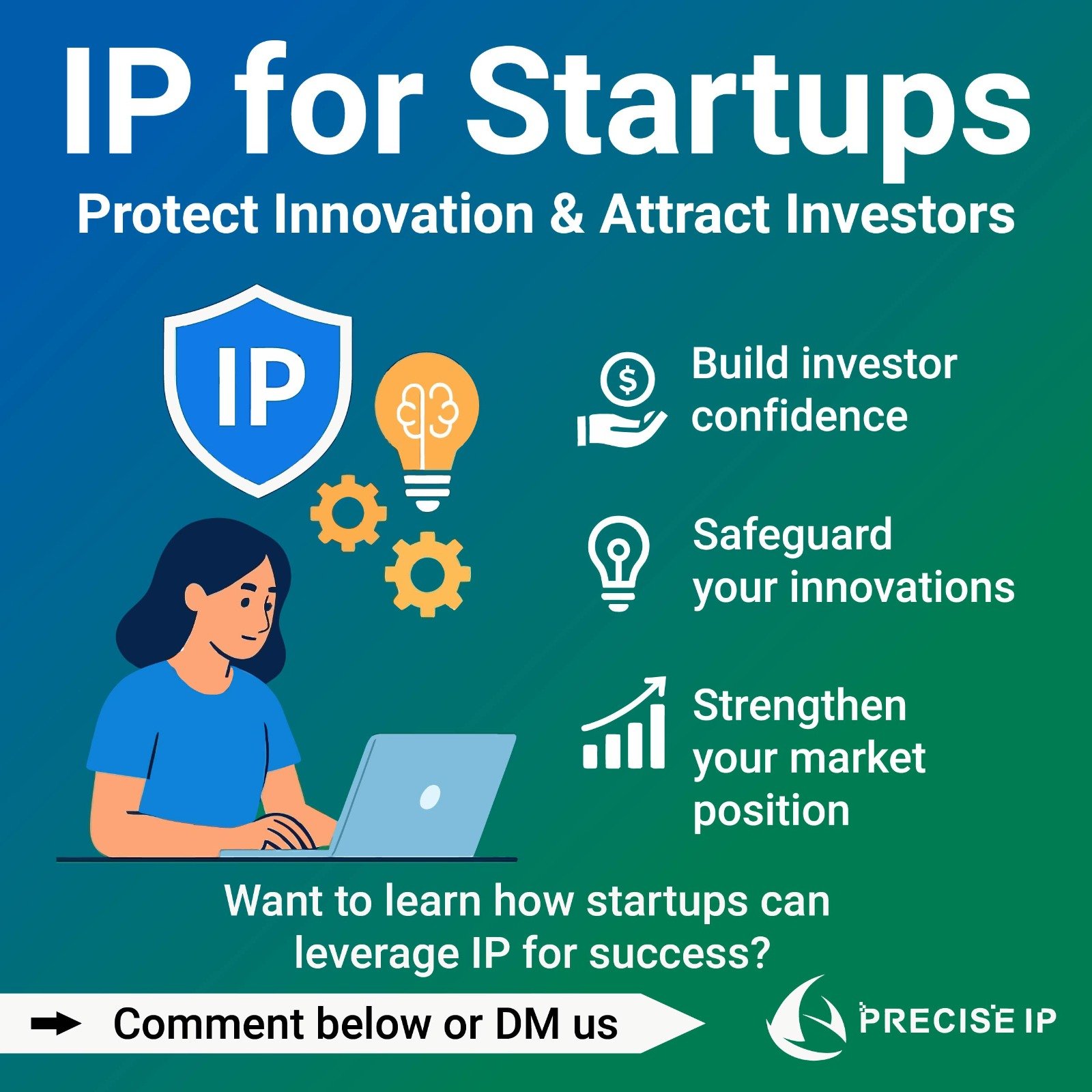
Learn how startups can use patents, trademarks, copyrights, and trade secrets to safeguard innovation, build investor confidence, and strengthen market position. Actionable steps, costs, timelines, and FAQs inside.
Target keywords: startup IP, intellectual property for startups, patents for startups, trademarks for startups, protect innovation, attract investors, IP strategy, IP portfolio
Why IP Strategy Matters for Startups
For startups, intellectual property (IP) isn’t just legal protection—it’s a growth engine. A strong IP strategy helps you:
-
Build investor confidence: Clear ownership and protection reduce risk.
-
Safeguard innovation: Block copycats and create defensible moats.
-
Strengthen market position: Differentiate your brand and technology.
-
Increase valuation: Protected assets can be licensed, franchised, or sold.
Without IP protection, you risk losing your competitive edge and diluting long-term value.
The Four Pillars of Startup IP
1) Patents (Protect technology & product features)
-
Best for: New technical solutions, product designs, manufacturing processes.
-
Timing: File before public disclosure (demos, posts, pitches, trade shows).
-
Outcome: 20 years (utility) of exclusive rights in each filing country.
2) Trademarks (Protect brand identity)
-
Best for: Company/product names, logos, taglines.
-
Timing: As soon as you settle on a brand name—before launch if possible.
-
Outcome: Renewable protection; strengthens brand trust and licensing potential.
3) Copyrights (Protect creative works)
-
Best for: Software code, UI/UX, content, documentation, graphics.
-
Timing: Automatically arises upon creation; registration boosts enforcement.
-
Outcome: Exclusive rights to reproduce, distribute, modify.
4) Trade Secrets (Protect confidential know-how)
-
Best for: Algorithms, formulas, datasets, pricing, GTM plans.
-
Timing: Ongoing—requires internal controls (NDAs, access limits, security).
-
Outcome: Protection lasts as long as secrecy is maintained.
Investor Lens: What VCs Look For in IP
-
Clear ownership: IP assigned to the company (not founders/contractors).
-
Freedom to Operate (FTO): Low risk of infringing others’ rights.
-
Protection in key markets: Coverage matches your go-to-market plan.
-
Enforceability: Realistic ability to monitor and act against infringement.
-
Alignment with business roadmap: IP supports your competitive moat.
When to File (and in What Order)
-
Before launch:
-
File provisional patent (if technical novelty).
-
Clear and file trademark for brand name/logo.
-
Put NDAs and trade secret protocols in place.
-
-
Within 12 months:
-
Convert provisional to non-provisional (or PCT for global track).
-
Expand trademark to priority markets/classes.
-
-
Pre-funding (Seed/Series A):
-
Conduct FTO search for core product.
-
Ensure IP assignments from all employees/contractors.
-
Register key copyrights (e.g., software).
-
Smart Budgeting for Early-Stage IP (Indicative)
-
Provisional patent: Lower-cost placeholder to secure a filing date.
-
Non-provisional/PCT: Higher investment—time your spend with traction.
-
Trademarks: Generally affordable; gives quick brand defensibility.
-
Trade secret program: Low legal cost; invest in security and process.
-
Monitoring: Set alerts; consider watch services for marks and patents.
(Costs vary by country/complexity. Prioritize filings that align with revenue and fundraising milestones.)
Common Mistakes to Avoid
-
Pitching publicly before filing (can destroy patent rights).
-
Choosing a risky name without a trademark search.
-
No IP assignment agreements with founders/contractors.
-
Over-disclosing source code without license strategy.
-
Ignoring international plans until it’s too late to claim priority.
A Simple, Actionable IP Plan for Startups
Week 1–2
-
Audit what’s protectable (tech, brand, content, data).
-
Run a knockout trademark search; pick a registrable name.
-
Implement NDAs, access controls, and a trade secret policy.
Week 3–6
-
Draft and file a provisional patent for core innovation.
-
File trademark applications in priority classes/markets.
-
Record assignment agreements for all IP contributors.
Month 3–12
-
Conduct an FTO review for launch territories.
-
Convert to non-provisional and/or PCT within deadlines.
-
Set up watch services and an enforcement playbook.
Global Strategy: Where to File?
-
Follow the money: File where you sell, manufacture, or seek investment.
-
Use the PCT to keep global options open for up to 30/31 months.
-
Tailor trademark classes to your current and near-term offerings.
-
Consider design protection for hardware/UX if visual differentiation matters.
IP & Valuation: Turning Protection into Growth
-
Defensible moat: Harder for competitors to copy your core tech and brand.
-
Licensing revenue: Monetize non-core applications and legacy versions.
-
Partnership leverage: Stronger negotiating power with distributors and OEMs.
-
Exit readiness: Clean, well-documented IP increases deal certainty.
Quick Founder Checklist
-
Provisional patent filed (if applicable)
-
Trademark filed for brand name/logo
-
All contributor IP assigned to the company
-
NDAs + access controls for trade secrets
-
FTO review scoped for launch markets
-
Docket of deadlines (conversions/renewals)
-
Monitoring + enforcement plan in place
FAQs for IP strategy
Q1: Can I talk to investors before filing?
Yes—under NDA. For public settings (demo days, websites, social media), file a provisional first.
Q2: Do I need patents if I’m building software?
Not always. Consider patents for technical innovations; otherwise lean on copyright + trade secrets and strong trademark strategy.
Q3: Should I file in every country?
No. Prioritize markets tied to revenue, manufacturing, or investment. Use the PCT to keep options open.
Q4: What if my brand name is taken in one market?
Rebrand early or choose a variant. It’s far cheaper than a forced rebrand later.
Q5: How do I show investors my IP is real?
Maintain a clean IP data room: filings, receipts, assignments, claim charts, and a docket of deadlines.
Call to Action
Want a tailored IP roadmap for your startup—timelines, costs, and the right markets to file in? Send us a message or book a quick consultation. We’ll help you protect your innovation and turn IP into a growth engine.
